InBody Scan NYC: What It Is, What It Measures, and What to Expect
...the way we achieve accurate results for CompleteBody clients
Personal Training
Mar 26, 2026
...the way we achieve accurate results for CompleteBody clients
Key Takeaways
The scale is lying to you. Not intentionally, but it can't tell you whether you lost fat, gained muscle, or just had a salty dinner. Two people can weigh exactly the same and have completely different body compositions. One might carry 35% body fat; the other, 18%. The scale reads identical for both.
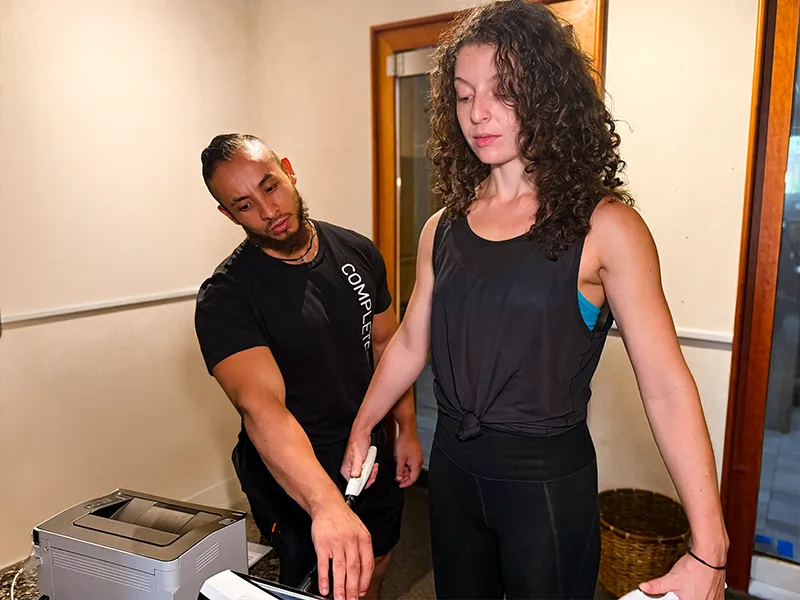
An InBody scan changes that. In 45 to 60 seconds, it breaks down your body fat percentage, muscle mass, visceral fat level, hydration status, and more. You step on, grip the handles, and get a printed result sheet that tells you more about your body than years of scale-watching ever could.
At CompleteBody, every membership includes a complimentary InBody scan and a personal training session. Five Manhattan locations. No extra booking. No extra cost.
According to the University of Rochester Medical Center, InBody scans are significantly more informative than weight scales for tracking real fitness changes. The scan uses bioelectrical impedance analysis (BIA), a method that sends a low-level electrical current through your body to measure how different tissues resist it. Fat, muscle, and water each conduct electricity differently, which is how the machine distinguishes them.
Here's what the experience actually feels like: nothing. You remove your shoes and socks, step onto the metal footpads, and hold the hand grips for about 45 to 60 seconds. The current is imperceptible. No needles, no radiation, no discomfort.
CompleteBody carries both the InBody 570 and the InBody 770. The 570 covers all core body composition metrics. The 770 adds a deeper layer of cellular health analysis, including phase angle and extracellular water ratio. Your trainer selects the right model based on your goals.
Learn more about body composition testing and personal training →
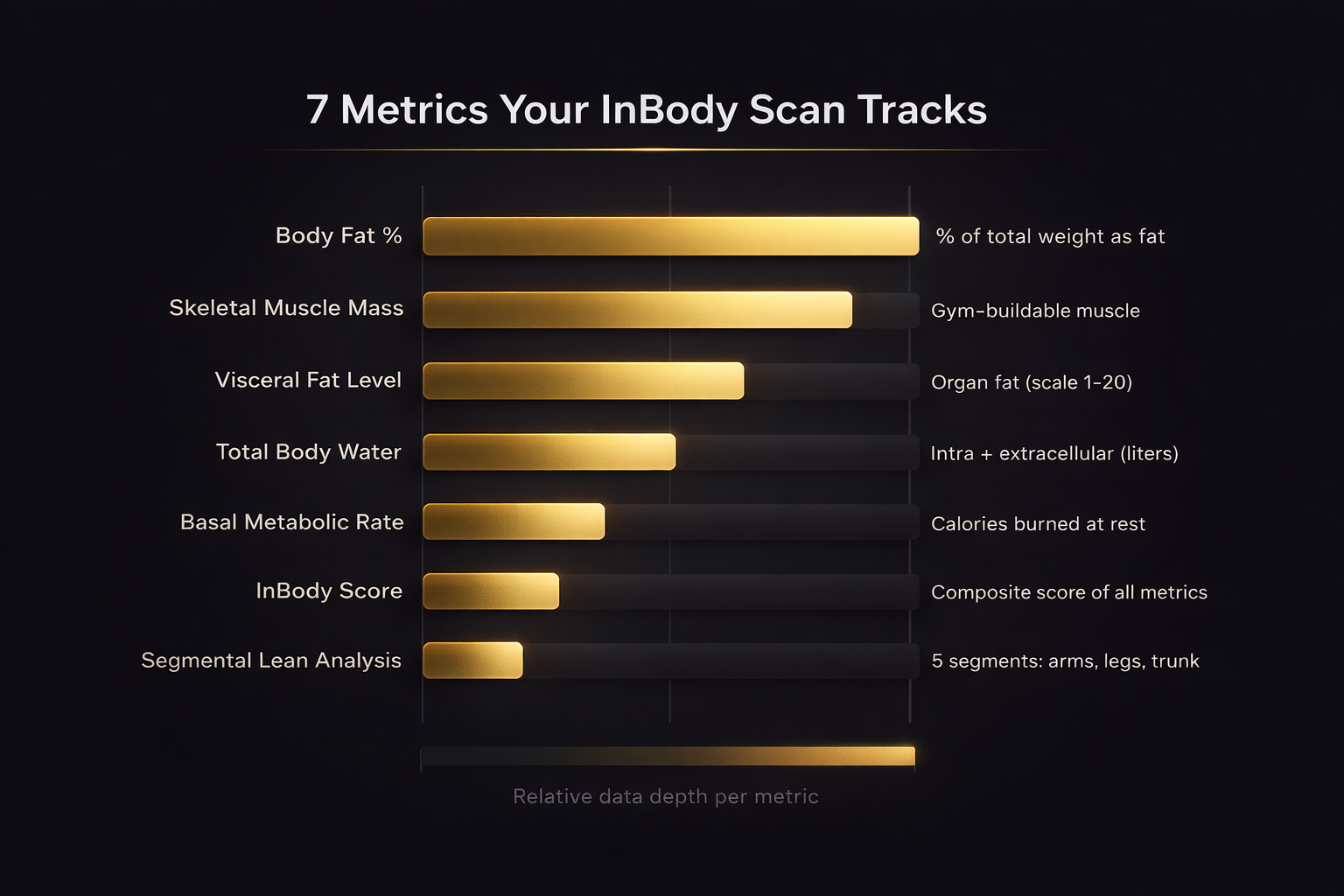
The InBody result sheet tracks seven distinct metrics, and the machine can store up to 8 historical scans on a single comparison sheet, so you can see your progress at a glance (InBody USA, 2026). That's more actionable data than any consumer scale can produce, and it arrives in under a minute.
Here's what each metric means in plain terms:
Body Fat % and Fat Mass. This tells you what percentage of your total weight is fat tissue, plus the actual weight in pounds or kilograms. It's the number most people ask about first.
Skeletal Muscle Mass (SMM). This is the muscle attached to your bones: the muscle you actually build in the gym. Higher SMM is associated with better metabolic health, injury resistance, and long-term longevity.
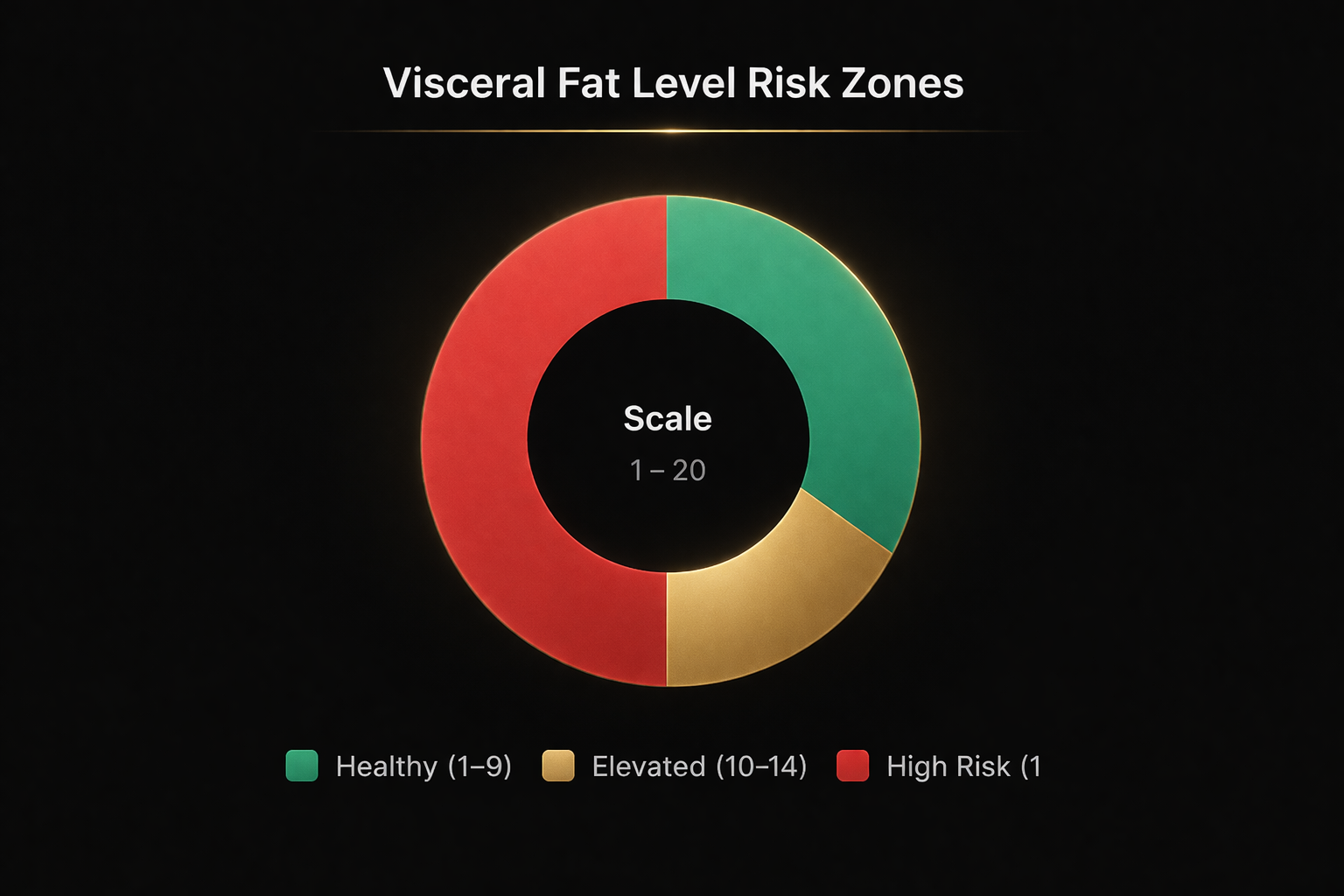
Visceral Fat Level. Measured on a scale of 1 to 20, this reflects fat stored around your internal organs. It's the type of fat most directly linked to metabolic disease. A level under 10 is considered healthy.
Total Body Water (TBW). The scan separates your total water into intracellular water (inside cells, indicating healthy cell volume) and extracellular water (outside cells). Extracellular water rises with inflammation or poor recovery.
Basal Metabolic Rate (BMR). This is the number of calories your body burns at rest. Knowing your BMR is the starting point for any effective nutrition strategy.
InBody Score. A composite fitness rating, scored out of 100, that reflects your overall body composition. Above 80 is strong. Between 70 and 79 is average. Below 70 signals an area that needs work.
Segmental Lean Analysis. This is where InBody separates itself from simpler body fat scales. It measures muscle mass across five separate segments: left arm, right arm, trunk, left leg, and right leg. Imbalances become visible immediately.
Citation CapsuleThe InBody result sheet displays up to 8 historical scans on one sheet for longitudinal comparison. Measured metrics include skeletal muscle mass, visceral fat level (scale 1–20), total body water split into intra- and extracellular compartments, basal metabolic rate, and segmental lean analysis across 5 body segments. (InBody USA, 2026)
Learn more about building muscle mass through strength training and fitness classes →
Both machines deliver a complete picture of your body composition. InBody USA confirms that the 570 and 770 models share the same core BIA measurement technology, with the 770 adding deeper fluid and cellular analysis on top (InBody USA, 2026). Either one gives you far more actionable data than a standard scale. The 770 goes deeper, adding extracellular water ratio analysis, phase angle (a marker of cellular health), and a more detailed segmental fat breakdown on top of everything the 570 provides.
InBody 570 measures:
InBody 770 adds:
CompleteBody has both models available. Your trainer selects the appropriate machine based on your intake conversation and current goals.
Meet our personal trainers and learn about the assessment process →
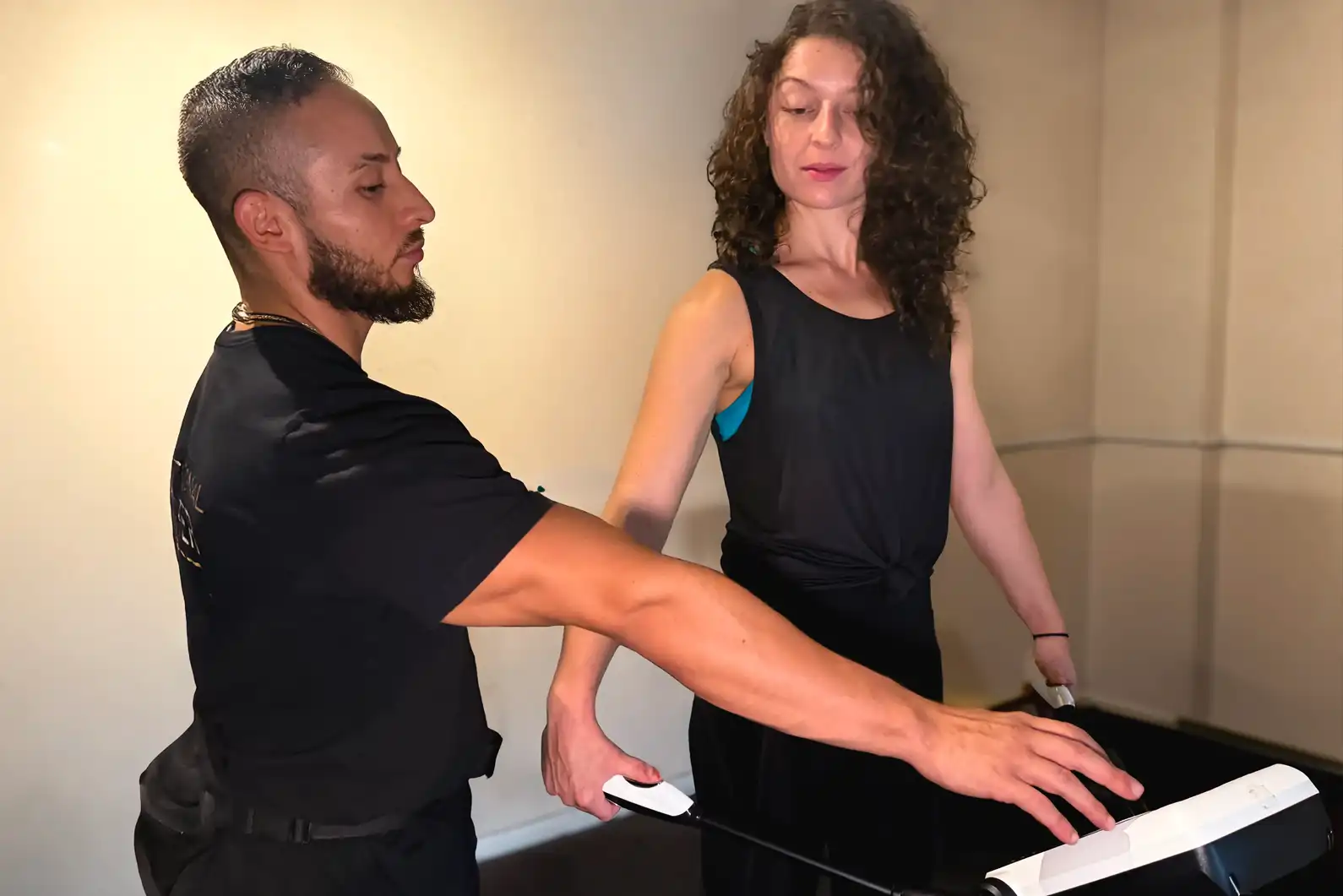
Hydration status directly affects BIA accuracy, which means the conditions you scan under matter. Drinking an extra liter of water before your scan can artificially lower your measured body fat percentage, while dehydration inflates it. Consistent preparation gives you results you can actually compare over time.
CompleteBody trainers recommend booking your first InBody scan in the morning, before your first training session. That timing tends to produce the most stable baseline readings, because your body hasn't been affected by food, intense exercise, or significant fluid shifts yet.
Follow this checklist before every scan:
Citation CapsuleInBody bioelectrical impedance analysis (BIA) scans should be performed under consistent conditions for valid longitudinal comparison. Key preparation factors include a 3–4 hour fast, avoiding strenuous exercise 6–12 hours prior, and scanning at the same time of day. Hydration status is the single largest variable affecting result accuracy. (InBody USA, 2026)
The InBody result sheet is dense on first look, but it's organized logically once you know what to focus on. The University of Rochester Medical Center notes that InBody results give gym-goers a measurably clearer picture of fitness progress than body weight alone (URMC). Here's how to interpret the key numbers.
Your result sheet shows a visual body type based on how your muscle and fat compare across segments. An "I" shape means balanced. A "D" shape means more muscle than fat, which is the target. A "C" shape means fat exceeds lean mass: the common starting point most people improve from.
Visceral Fat LevelZoneWhat It Means1–9HealthyNo action needed10–14ElevatedAddress through nutrition and cardio15–20High RiskConsult trainer and physician
Improve your body composition with nutrition coaching →
For gym-goers in NYC, InBody is the practical choice: it's faster, more accessible, and just as accurate for tracking fitness progress over time. Research published in PubMed found that InBody BIA technology correlates with DEXA at r=0.984 (PubMed, 2018). That's a near-perfect correlation, which means the data you get from an InBody scan is highly reliable for the purpose most gym-goers have: tracking change.
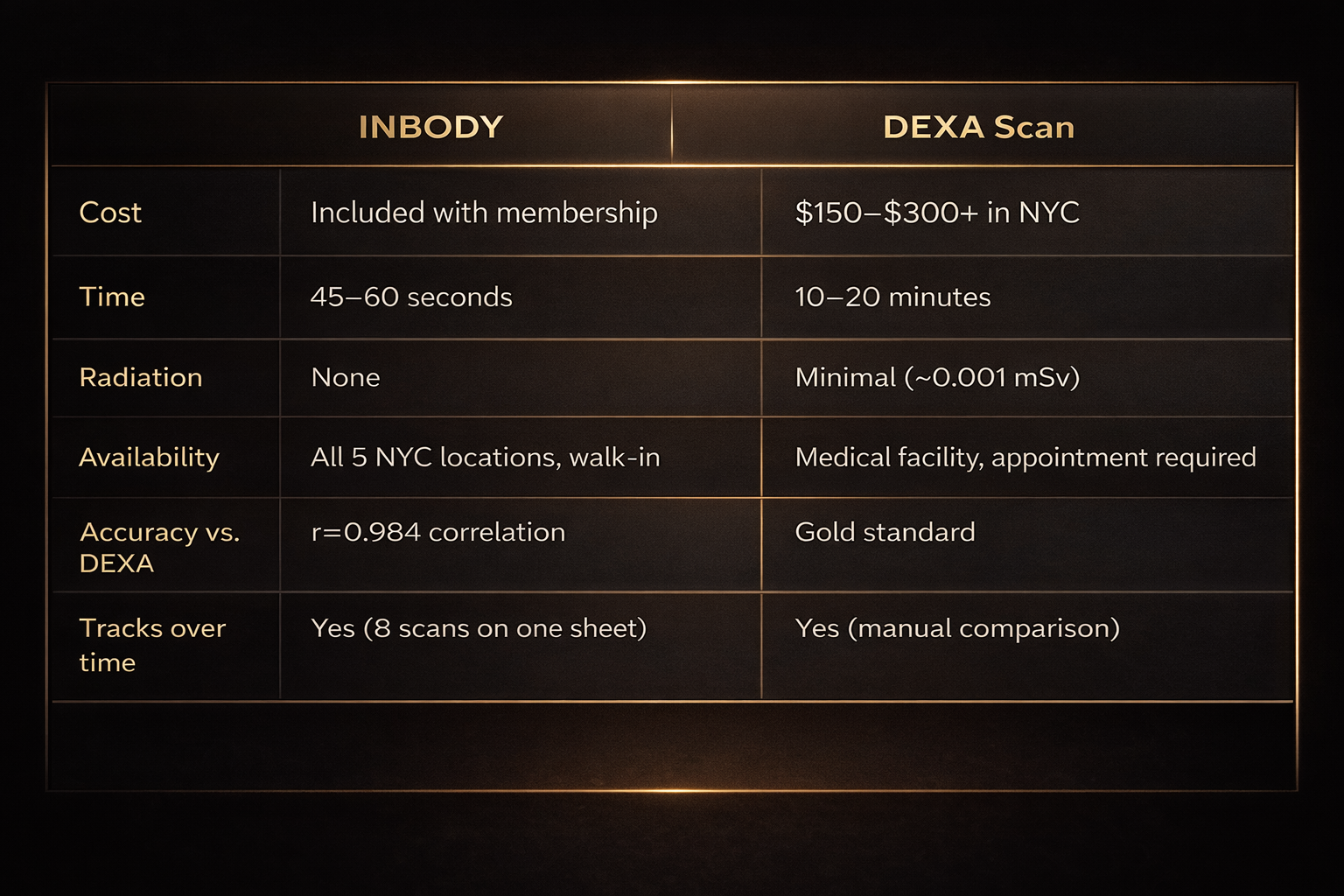
One honest caveat: a 2020 study found that InBody may underestimate body fat by 1 to 4.8% compared to DEXA in some populations (PMC/NCBI, 2020). For the overwhelming majority of gym-goers, that margin doesn't change the training plan. But it's worth knowing.
DEXA makes more sense if you:
InBody is the right tool if you:
Citation CapsuleA 2018 PubMed study found InBody bioelectrical impedance analysis correlates with DEXA at r=0.984, confirming near-gold-standard accuracy for body composition tracking. A separate 2020 study noted InBody may underestimate body fat by 1–4.8% vs. DEXA in some populations, a margin that rarely changes practical training decisions for fitness-focused individuals. (PubMed, 2018; PMC/NCBI, 2020)
A good trainer doesn't just hand you a printout. They use the segmental lean analysis to detect muscle imbalances and build a program that targets your actual weak points, not a generic template. This is where the InBody data earns its value, and it's why CompleteBody includes the scan alongside your personal training session from day one.
The segmental analysis reveals left-to-right muscle imbalances that are invisible on a scale. In our experience, a 12% imbalance between dominant and non-dominant limbs is common in untrained clients. That asymmetry can predict injury risk before it shows up as pain. A trainer who catches a significant imbalance early can prescribe corrective work before you ever load a barbell.
Here's how the data maps to program design:
InBody USA research also shows that regular body composition tracking with InBody increases client retention in personal training programs (InBody USA). That tracks: when people see objective progress in the numbers, they stay consistent.
The re-scan schedule trainers typically recommend is every 4 to 8 weeks. That interval gives your body enough time to show meaningful change, and keeps you from obsessing over weekly noise.
Every CompleteBody membership includes your first InBody scan and a personal training session. Your trainer walks through your result sheet with you and builds your initial program directly from the data. No guesswork.
Research published in PubMed found InBody's BIA technology correlates with DEXA at r=0.984, which is near gold-standard accuracy for tracking body composition changes. (PubMed, 2018) One study found InBody may underestimate body fat by 1–4.8% vs. DEXA in some groups, but for gym-goers tracking progress over time, that margin rarely affects practical decisions.
Every 4 to 8 weeks is the range most trainers recommend. That gives your body enough time to show meaningful, measurable change in muscle mass or body fat. Scanning too frequently (weekly) produces noise, not signal. Scanning too infrequently means you lose the feedback loop that keeps training on track.
You should skip intense exercise for 6 to 12 hours before your scan. Post-workout, your body holds extra fluid in the muscles you trained, which affects the impedance reading. A light walk is fine. A heavy leg session the morning of your scan will make your hydration data less accurate and harder to compare across visits.
Nothing at all. The electrical current used in BIA is imperceptible to the human body. You stand on the footpads, hold the hand grips, stay still for 45 to 60 seconds, and you're done. There's no sensation, no radiation, and no physical contact with a technician. It's one of the most passive fitness tests available.
Yes. Every CompleteBody membership includes a complimentary InBody scan and a personal training session. Your trainer reviews your results with you and uses the data to shape your initial program. All five Manhattan locations (Union Square, Chelsea, Midtown East, Financial District, and Grand Central) have InBody machines available.
The 570 covers all core body composition metrics: body fat %, skeletal muscle mass, visceral fat, BMR, total body water, and InBody Score. The 770 adds phase angle (cellular health), extracellular water ratio analysis, and more detailed segmental fat breakdown. CompleteBody has both. Your trainer selects the right model for your goals.
A scale gives you one number: total body weight. It can't tell you if you gained muscle, lost fat, or just retained water. InBody separates your weight into fat mass, skeletal muscle, body water, and more, across five body segments. As the University of Rochester Medical Center points out, that breakdown is far more informative for tracking actual fitness change. (URMC)
Body weight is a poor measure of fitness progress. What matters is what that weight is made of: how much is muscle, how much is fat, and where each one lives in your body. An InBody scan answers those questions in under 60 seconds, and it answers them again and again over months so you can see exactly what's changing.
Every CompleteBody membership starts there: a complimentary InBody scan, reviewed with a certified personal trainer who uses your results to build your first program. Five locations across Manhattan. Walk in, get tested, and train with actual data behind you.
CompleteBody has five locations in Manhattan: Union Square, Chelsea, Midtown East, Financial District, and Grand Central.